

Agricultural solar mounting system – Complementary agrivoltaics | Bexie
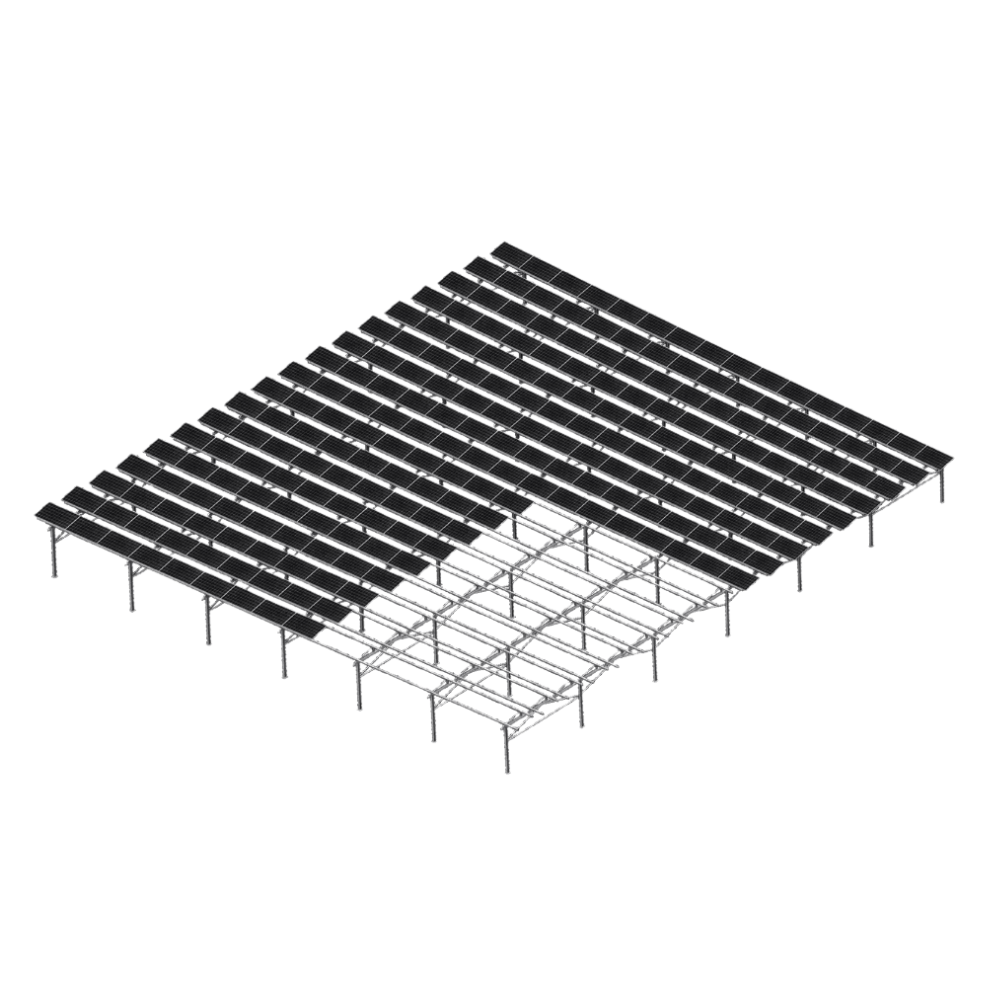
Agricultural solar mounting system designed for PV projects complementary to farming activity. Delivers both agricultural and energy yield on the same land, improving the use of the available surface area. Made of AL6005-T6 aluminium and Zn-Al-Mg coated steel for maximum durability in rural environments.

Overview
Bexie Energy’s agricultural solar mounting system is an agrivoltaic solution that allows photovoltaic panels to be installed on farmland without giving up the productive activity. The agricultural solar mounting system is designed for PV projects complementary to agriculture, improving the use of the land and delivering both energy and agricultural yield on the same surface area.
Bexie’s agricultural solar mounting system combines elevated structures with solar panels that allow enough light through for crops growing below the modules, while generating clean energy on the upper level. This dual function makes the agricultural solar mounting system one of the highest-value solutions per m² of available land for owners of farming estates.
Technical specifications of the agricultural solar mounting system
- Wind speed: up to 70 m/s (3s gust, MRI=50Y)
- Snow load: 0.55 kPa
- Tilt angle: 5° – 45°
- Module layout: horizontal and vertical
- Main material: AL6005-T6 aluminium
- Structural steel: Q235B / Q355B with Zn-Al-Mg coating
- Application: farmland with simultaneous PV use
What is agrivoltaics and how does the agricultural solar mounting system work?
Agrivoltaics is the practice of installing solar panels over farmland in such a way that the agricultural activity can continue underneath the modules. Bexie’s agricultural solar mounting system uses elevated structures that make it possible to:
- Continue growing crops underneath the solar panels
- Generate PV power on the upper part of the structure
- Reduce crop evapotranspiration thanks to partial shading
- Protect crops from hail, strong winds and late frosts
- Double the economic return of the land
Advantages of the agricultural solar mounting system over conventional ground-mount installations
- Doesn’t sacrifice productive farmland — dual use of the same soil
- Higher profitability per hectare — agricultural and energy income combined
- Partial shading can benefit heat-sensitive crops
- Reduced evapotranspiration — lower irrigation needs
- Crop protection against extreme weather conditions
- Eligible for specific subsidies for agrivoltaic projects
Applications of the agricultural solar mounting system
- Horticultural and fruit crops under solar panels
- Vineyards with complementary PV production
- Greenhouses with partial PV roofing
- Forage crops and pasture with extensive livestock farming
- Farming estates looking to diversify revenue
- Rural energy community projects
Materials for demanding agricultural environments
The agricultural solar mounting system uses materials specifically selected to withstand the most demanding rural environments:
- AL6005-T6 aluminium for the main profiles — lightweight and corrosion-resistant
- Q235B/Q355B steel with Zn-Al-Mg coating — superior resistance to humidity, fertilisers and crop protection products compared to standard galvanised steel
- Stainless steel fasteners — integrity of every joint throughout the entire lifespan
- Minimal maintenance under intensive agricultural use conditions
Structural resistance in exposed rural areas
The agricultural solar mounting system is designed for the most demanding conditions in rural and farming areas:
- Wind resistance of up to 70 m/s — above the requirements for highly exposed areas
- Snow load of 0.55 kPa — suitable for mountain and inland regions
- Wide tilt angle from 5° to 45° to adapt to the optimal orientation of each plot
Standards and certifications
- ASCE 7-05 / 7-10 / 7-16 (USA)
- GB50009-2012 (China)
- JISC 8955-2017 (Japan)
- AS/NZS 1170.2-2021 (Australia/New Zealand)
- EUROCODE 0-9 (Europe)
- NSCP 2015 (Philippines)
- NCh 432 (Chile)
Performance of the agricultural solar mounting system
A typical agrivoltaic installation in southern Europe can generate between 800 and 1,200 MWh per year per installed hectare, depending on module density and geographical area. This can translate into additional income of between 40,000 and 80,000 euros per year per hectare on projects with energy sale contracts or self-consumption.
Calculate the estimated output for your plot using the European Commission’s PVGIS portal.
Integration with the Bexie energy system
The agricultural solar mounting system can be combined with our high-efficiency TopCon solar panels, industrial grid-tie inverters and storage systems for a complete agrivoltaic installation. Take a look at the rest of the solar mounting structures available in the Bexie catalogue.
Frequently asked questions about the agricultural solar mounting system
Do solar panels affect crop yield?
It depends on the type of crop and the panel density. Studies on agrivoltaic projects show that crops such as lettuce, spinach, strawberries and herbs can benefit from partial shading, especially in summer. For crops that require maximum irradiation, panel density and tilt can be adjusted to find the optimal balance.
Can I still use farming machinery with the solar mounting installed?
Yes, the elevated structures of the agricultural solar mounting system are designed with the height and spacing needed to allow standard farming machinery to pass through. The custom design lets you adapt the structure’s height to the specific needs of your activity.
Do I need special permits for an agrivoltaic installation?
Agrivoltaic installations may require planning and environmental authorisation depending on the region and the size of the project. Our team can advise you on the procedures required and the funding available for agrivoltaic projects in your area.
Are there subsidies for agricultural solar mounting projects?
Yes, there are specific funding programmes for agrivoltaic projects at both national and EU level. The new European regulation also favours this type of installation. Contact our team to find out about the funding available in your area.
Which crops are most compatible with agrivoltaics?
The most compatible are partial-shade crops such as leafy vegetables, strawberries, raspberries, lavender, herbs and some fruit trees. Vineyards are also highly compatible. Crops that require maximum irradiation such as sunflowers or maize are less suitable, although they can work with low panel density.