
Solar PV fence system – Energy-generating boundary
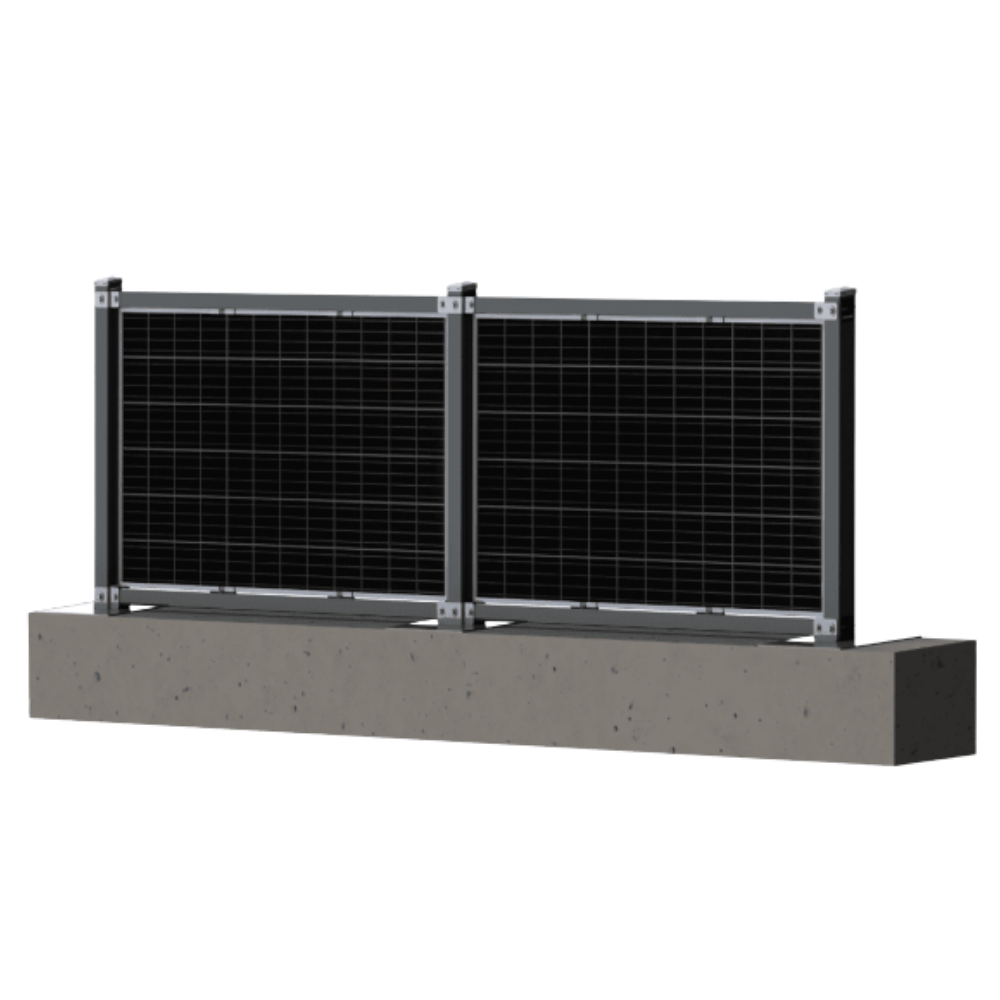
Solar pv fence system that combines the role of perimeter fencing with solar power generation. The panels are installed in a vertical 90° position, creating a functional fence that generates electricity while delimiting and protecting the space. Modular design that’s easy to install and adjust, in steel with Zn-Al-Mg coating.

Overview
Bexie Energy’s solar pv fence system is an innovative solution that turns property boundary fencing into a source of solar power generation. The solar fence installs panels in a vertical 90° position, creating a functional fence that delimits and protects the space while generating clean electricity for residents or property owners, reducing dependence on the grid.
The Bexie solar pv fence system takes advantage of surfaces that are not usually used for solar generation — perimeter fences — turning them into energy assets without taking up any additional space on the property.
Technical specifications of the solar fence system
- Wind speed: up to 50 m/s (3s gust, MRI=50Y)
- Snow load: 1.20 kPa — suitable for areas with heavy snowfall
- Installation angle: 90° — vertical position
- Module layout: horizontal and vertical
- Material: Q235B / Q355B steel with Zn-Al-Mg coating
- Application: perimeter fencing with integrated PV generation
How does the solar fence system work?
The solar fence replaces or complements the conventional fencing of a property. The solar panels are installed in a vertical position, forming the surface of the fence. Although the vertical position is less efficient than the optimal tilt of 30-35°, the solar fence offers unique advantages that more than make up for this difference:
- Takes up no additional space on the property
- Performs the role of both boundary fence and energy generator
- Generates energy for more hours on days with low irradiance
- The vertical position captures diffuse solar radiation better on cloudy days
- Especially efficient in east-west orientations for morning and evening capture
Benefits of the solar fence system
- Dual function — fencing and generation in a single structure
- No additional surface area required — uses the existing perimeter
- Cuts your electricity bill while delimiting your property
- Modular design — adaptable to any fence length
- An attractive alternative to conventional fences
- High resistance to snow (1.20 kPa) and wind (50 m/s)
Applications of the solar fence system
- Detached homes with gardens or fenced plots
- Industrial estates with long perimeter fences
- Agricultural and livestock facilities
- Residential communities with fenced common areas
- Sports and leisure facilities
- Rural properties with long perimeter fencing
Resistance to snow and extreme conditions
The solar fence system stands out for its high resistance to a snow load of 1.20 kPa — significantly higher than most of the solar structures in the catalogue. This makes it especially suitable for:
- Mountain areas with frequent and heavy snowfall
- Inland regions with harsh winters
- Any location where the accumulation of snow on vertical surfaces is a design factor
Output of the solar fence system
The output of a solar fence in a vertical position is lower than that of tilted panels, but it can be significant over long perimeters. A 50-metre fence with double-sided panels can host between 20 and 30 panels of 500W, generating an installed capacity of 10-15 kWp and between 8,000 and 12,000 kWh per year in southern Europe.
Calculate the estimated output for your installation using the European Commission’s PVGIS portal.
Standards and certifications
- ASCE 7-05 / 7-10 / 7-16 (USA)
- GB50009-2012 (China)
- JISC 8955-2017 (Japan)
- AS/NZS 1170.2-2021 (Australia/New Zealand)
- EUROCODE 0-9 (Europe)
- NSCP 2015 (Philippines)
- NCh 432 (Chile)
Integration with the Bexie energy system
The solar fence system can be combined with our bifacial TopCon solar panels — especially suitable for vertical installations thanks to their dual-side capture capability — hybrid inverters and storage batteries. Take a look at the rest of the solar mounting structures in the Bexie catalogue.
Frequently asked questions about the solar fence system
Does it produce less energy than a tilted panel?
Yes, the vertical position captures less direct solar radiation than the optimal tilt of 30-35°. However, the loss of output is offset by the fact that it takes up no additional surface area and simultaneously performs the role of fencing. In east-west orientations, the difference in output compared to a conventional installation is smaller.
What type of panels are most suitable for the solar fence?
Bifacial panels are particularly recommended for the solar fence system, as they can generate energy from both the outer face (sun-facing) and the inner face (which captures reflected light). Take a look at our range of bifacial TopCon panels.
Do I need planning permission to install a solar fence?
It depends on the local authority and the characteristics of the installation. In general, PV fencing below a certain height may be considered a self-consumption installation under a simplified regime. Our team can advise you on the procedures required in your area.
Can it be installed in areas with heavy snow?
Yes, the solar fence system has a snow load resistance of 1.20 kPa, which makes it especially suitable for areas with frequent snowfall. The vertical position also helps accumulated snow to slide off naturally.
Does the solar fence provide visual privacy?
Yes, the solar panels installed in a vertical position form an opaque surface that provides complete visual privacy, similar to a conventional fence, while generating solar power.