

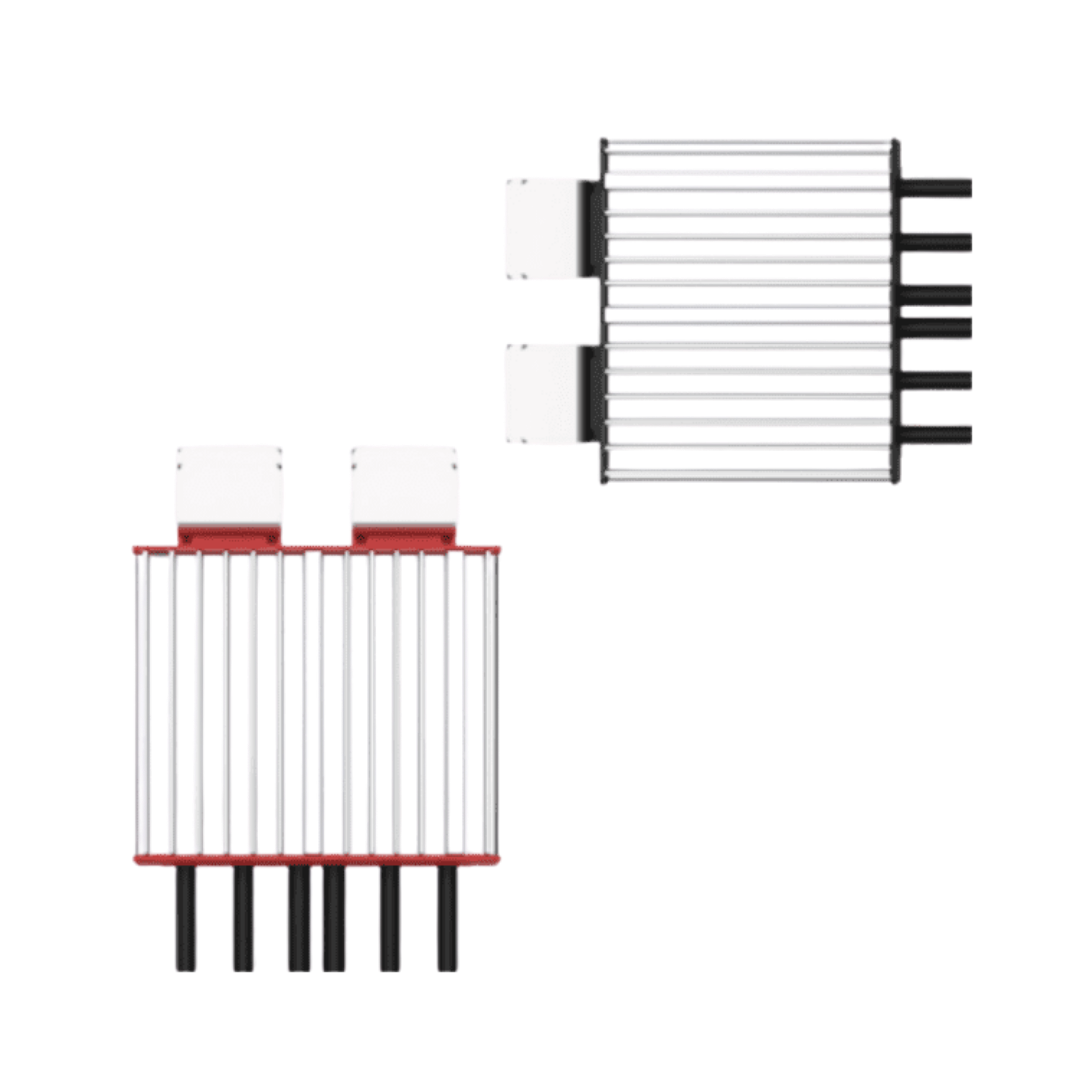
Solar PV optimiser – Maximise the output of every panel individually
Solar PV optimiser that improves the efficiency and safety of the installation by optimising the performance of each panel individually. Features safe automatic shutdown on overtemperature, accurate fault monitoring and broad compatibility with inverters and PV modules. Requires installation of the BFS-ESW11-K emergency switch.

Overview
Bexie Energy’s solar PV optimiser is a power device installed individually on each solar panel, optimising the performance of every module independently. The solar PV optimiser improves the overall efficiency of the installation, especially under conditions of partial shading, dirt or differential degradation between panels.
The Bexie solar PV optimiser features automatic shutdown on overtemperature for maximum safety, accurate monitoring of the status of each module and broad compatibility with the leading inverters and PV panels on the market.
Solar PV optimiser features
- Type: module-level power electronics optimiser (MLPE)
- Optimisation: individual per panel — independent of the rest of the string
- Safety: automatic shutdown on overtemperature
- Monitoring: accurate fault detection per module
- Compatibility: broad — works with most inverters and PV modules on the market
- Requirement: mandatory installation of the BFS-ESW11-K emergency switch
What is a solar PV optimiser and what is it used for?
A solar PV optimiser is a DC-DC converter that connects to each solar panel individually. Its main function is to ensure that every panel always operates at its maximum power point (MPPT), regardless of the conditions of adjacent panels.
Without a solar PV optimiser, if one panel in the string is shaded or dirty, it drags down the output of all the other panels connected in series. With the optimiser, each panel works independently, eliminating the drag effect and maximising the system’s total output.
Benefits of the solar PV optimiser
- Higher output in installations with shading: eliminates the drag effect between panels
- Individual optimisation: each panel works at its own maximum power point
- Module-level monitoring: identifies exactly which panel is faulty or underperforming
- Enhanced safety: automatic shutdown on overtemperature
- Design flexibility: allows strings with panels at different orientations or tilts
- Compatible with multiple inverters: doesn’t restrict your choice of inverter
When is a solar PV optimiser recommended?
A solar PV optimiser is especially recommended in the following cases:
- Roofs with partial shading from chimneys, antennas, trees or nearby buildings
- Installations with panels at different orientations or tilts
- Complex roofs where it’s not possible to install all panels at the same orientation
- Installations where individual monitoring of each panel matters
- Projects that require maximum safety against overtemperature events
Solar PV optimiser vs microinverter — which one to choose?
- Solar PV optimiser (this product): works alongside a central inverter, optimises at DC level, lower cost per panel, centralised maintenance at the inverter
- Microinverter: converts to AC at each panel, no central inverter required, greater flexibility but higher cost and more maintenance points
For most residential installations, a solar PV optimiser combined with a quality hybrid inverter offers the best balance between performance, cost and simplicity.
Automatic safety shutdown
The solar PV optimiser includes an automatic shutdown system on overtemperature that safely disconnects the panel when an abnormal temperature is detected. This protects both the installation and the building against risk situations, meeting the strictest safety requirements.
The use of the Bexie solar PV optimiser requires the installation of the BFS-ESW11-K emergency push-button switch to ensure complete system safety.
Accurate module-level monitoring
With the solar PV optimiser, the Bexie Monitoring platform can display the output of each individual panel in real time, allowing you to:
- Identify exactly which panel is producing less
- Detect shading, dirt or degradation in specific modules
- Optimise maintenance — only clean or inspect the panels that actually need it
- Verify the expected performance of every module
Integration with the Bexie PV system
The solar PV optimiser can be combined with our TopCon solar panels, hybrid inverters and storage batteries for a complete and optimised self-consumption installation. Take a look as well at our emergency shutdown switch to complete the safety system. More information on UK and EU regulations at the MCS (Microgeneration Certification Scheme).
Solar PV optimiser FAQs
Do I need a solar PV optimiser if I don’t have shading?
If your installation has no shading or obstructions and all panels share the same orientation and tilt, the benefit of an optimiser is smaller. However, individual module-level monitoring and overtemperature safety remain relevant advantages for any installation.
Is it compatible with my current inverter?
The Bexie solar PV optimiser has broad compatibility with the leading inverters on the market. Contact our technical team to confirm compatibility with your specific model.
How many optimisers do I need?
One solar PV optimiser is installed per solar panel. If you have 10 panels, you need 10 optimisers. This enables individual optimisation and monitoring of every module.
Why do I need the BFS-ESW11-K switch?
The BFS-ESW11-K emergency switch is a mandatory safety requirement when using optimisers. It allows the entire installation to be manually disconnected in case of an emergency — such as a fire or fire-brigade intervention — reducing the voltage in the DC cables to a safe level.
How much does production increase with the solar PV optimiser?
It depends on the shading level of the installation. In installations without shading, the improvement is minimal (1–3%). In installations with frequent partial shading, the improvement can range from 10% to 25%. In installations with multiple orientations, the optimiser can recover up to 20% of lost output.
More information
| Potencia | 700, 1200 |
|---|


