

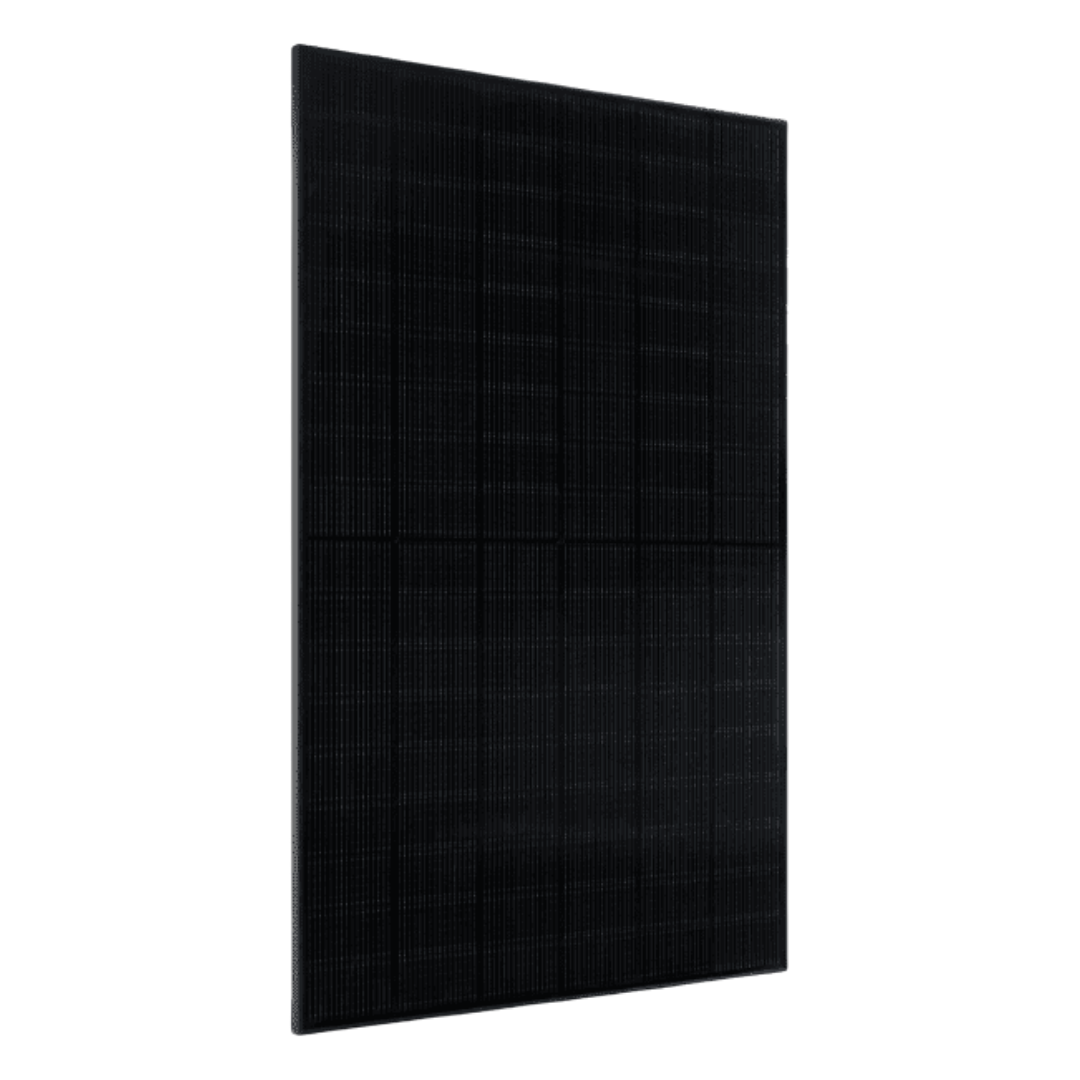


425–445W Bifacial Solar Panel – Monocrystalline TopCon · BE425-445T8-108(HC)BF
Bifacial N-Type photovoltaic module from 425 to 445W with TopCon SMBB technology and 108 half-cut cells. Generates energy from both sides of the panel, maximising output in installations with reflective ground or light-coloured roofs. Low annual degradation and high durability against extreme environmental conditions.

Overview
Bexie Energy’s BE425-445T8-108(HC)BF bifacial N-Type solar panel combines the latest-generation TopCon technology with a dual active side to maximise energy output in any type of installation. With power ratings of 425 to 445W and 108 multi-busbar half-cut cells, it offers the best balance between performance, durability and cost per Wp on the market.
Bifaciality enables the panel to capture solar radiation from both the front and back sides, harnessing light reflected from the ground, the roof or any light-coloured surface to generate up to 20-30% more annual energy than an equivalent monofacial module.
Technical specifications of the bifacial N-Type solar panel
- Power: 425 W – 445 W
- Technology: N-Type TopCon + SMBB (multi-busbar)
- Number of cells: 108 half-cut
- Bifacial: yes — generates energy from both sides
- Dimensions: 1722 x 1134 x 30 mm
- Cell type: N-type monocrystalline
Advantages of bifacial N-Type technology
- Generation from front and back sides — up to 25% more annual energy
- Lower annual degradation thanks to N-Type technology (reduced LID/LeTID)
- Better performance under high temperatures than P-Type modules
- Improved behaviour under low-irradiance conditions
- SMBB technology reduces internal resistance and improves efficiency
- Longer lifespan and optimised return on investment
What is SMBB (multi-busbar) technology?
SMBB (Super Multi-BusBar) technology divides the area of each cell among multiple smaller-section conductors. This reduces ohmic losses, improves tolerance to microcracks and increases the overall efficiency of the module.
Combined with N-Type TopCon technology, the result is a module with lower initial degradation, higher conversion efficiency and more stable output throughout its entire lifespan.
Applications of the bifacial solar panel
- Ground-mount installations with reflective surfaces (white gravel, concrete, grass)
- Flat roofs with a light-coloured or reflective finish
- Elevated structures with clear space underneath the panels
- Photovoltaic pergolas and carports
- Utility-scale solar plants where maximising output per m² is essential
- Installations in snowy areas where snow increases reflection
Comparison: bifacial vs monofacial
- The bifacial panel generates more energy with the same number of installed modules
- Lower cost per kWh produced over the lifespan
- Particularly profitable on ground-mount installations or elevated structures
- The bifacial gain ranges between 5% and 30% depending on ground albedo
Performance under real-world conditions
On south-facing installations with a 30-35° tilt in southern Europe, this module can generate between 430 and 480 kWh per year per installed panel on its front side, in addition to a bifacial contribution of between 20 and 120 kWh extra depending on the ground albedo and the configuration of the installation.
This translates into average savings of between 65 and 90 euros per year per panel at current energy prices, with a typical payback period of 5 to 7 years.
Integration with the complete PV system
This bifacial solar panel can be combined with our hybrid inverters, LFP storage batteries and solar mounting structures for a complete and optimised self-consumption installation.
Frequently asked questions about bifacial solar panels
How much more does a bifacial panel produce compared with a monofacial one?
It depends on the ground albedo (reflectivity) and the configuration of the installation. Under typical conditions with gravel or concrete ground, the bifacial gain ranges between 5% and 25% of additional output compared with the same panel in a monofacial version.
Does bifacial work well on a pitched roof?
On a pitched roof flush with the roofing, the bifacial gain is minimal because there’s no space for reflected light. Bifacial performs better on ground-mount installations, elevated structures or flat roofs with elevated mounting.
Is it compatible with any solar inverter?
Yes, the BE425-445T8-108(HC)BF modules are compatible with most inverters on the market. Contact our technical team for the optimal string design based on your installation.
What’s the difference between N-Type and P-Type in bifacial panels?
Bifacial N-Type panels have lower initial degradation (LID), better performance at high temperatures and higher conversion efficiency than P-Type bifacial panels. They’re the most advanced technology currently available on the photovoltaic market.
Do I need a special structure to install bifacial panels?
To make the most of bifaciality, we recommend a structure that raises the panels at least 30-50cm above the ground or the roof and allows light to reach the back side. Elevated ground-mount structures or flat roofs with spacers are ideal.